
Launch of new co-produced guide and training offer for professionals working with survivors of torture
The online launch of our new Guide for Professionals Working with Survivors of Trauma was attended by 250 people from charities, local government, health services and legal organisations from countries across the globe including Malawi, Poland and the USA. It felt very hopeful and energising to be joined by so many people who share a commitment to responding in a trauma-informed way.
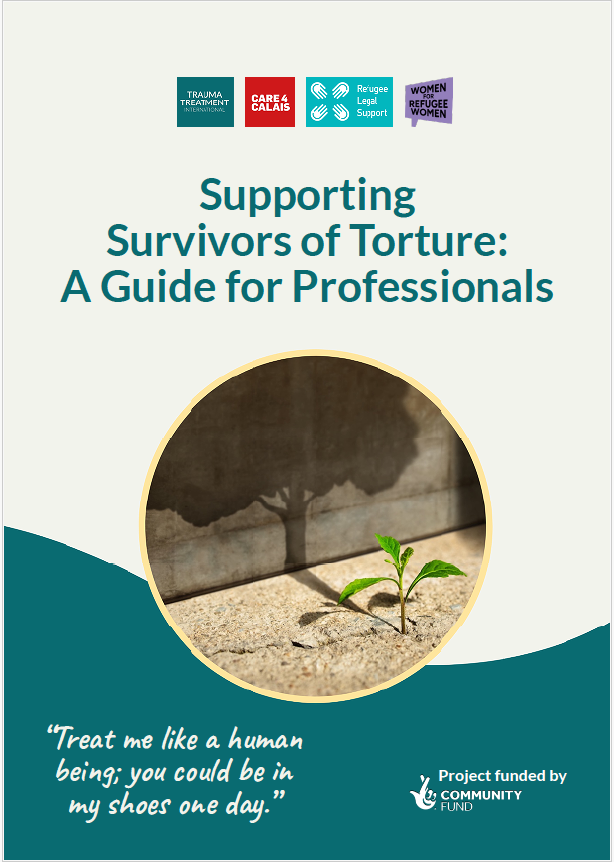
An expert panel featured speakers from Trauma Treatment International and our partners Care4Calais, Refugee Legal Support and Women for Refugee Women. The guide, co-produced by people with lived experience of torture along with frontline workers supporting survivors, is part of a wider package which includes new co-produced training for working psychologically safely and sensitively with survivors of torture.
““When you have a connection with a survivor from torture, feel their pain. Learn what happened to them and absorb what they are trying to say. Really listen to them and help them to heal but don’t place additional burdens on them.””
Zoe Given-Wilson, Clinical Director at TTI, said: “Torture can silence survivors due to feelings of shame, fear, or systemic barriers. Its effects ripple outward, influencing entire communities. Together, this can prevent us all from hearing directly what survivors require to thrive. So we adopted a co-production model to shift power and centre survivors’ views on what professionals should prioritise when working with them.”
The guide, funded by the National Lottery, sets out five key principles to consider when working with survivors of torture along with simple to action practical tips.
Anastasia Marsh from Refugee Legal Support said: “The recommendations are practical and beneficial, especially in time-bound situations. Just taking fe minutes before a meeting to give the survivor choices and explain why you need certain information can help build rapport and trust.”
Dina Aragaw from Women for Refugee Women says the practical tips for frontline workers to look after their own mental health are pivotal: “It’s so important to sustain oneself from vicarious trauma of the different stories and exposure to trauma. Organisations need to have a structure in place to support those who are at the frontline.”
Care4Calais’ Sydney Sopher commented on ways that the tips can increase confidence of professionals: “Distress doesn’t always mean people want to stop talking about what happened to them. It can take a bit of bravery from the professional’s side to sit with that person but we need to be with them as they work through their difficult feelings.”
We were delighted to receive positive feedback on the guide and the “easy to digest” discussion from the “passionate and expert” panel. Next steps will be to continue to share this practical approach through our training and organisational support. To find out more, read the Guide here and get in touch to explore our training offers.