
TTI partners with Women for Refugee Women on lived experience research project
Trauma Treatment International is proud to have supported the charity Women for Refugee Women (WRW) in ground-breaking research led by people with lived experience of the UK asylum system.
The research resulted in three influential reports which garnered national media coverage, were cited in Parliament and contributed to policy changes. And now, based on this impactful work, Women for Refugee Women’s researchers have put together a “How to Guide” for participatory research.
Sarah Cutler, TTI CEO, said: “We are really grateful to WRW for shining a light on the need for a trauma-informed approach to participatory research, drawing on their experiences and the partnership with TTI. WRW’s insights and advice in this guide offer powerful practical steps for others looking to challenge injustice.”
The guidance recommends integrating structured therapeutic and reflective support from the outset to address emotional needs and prevent harm in a proactive way. See the key recommendations below.
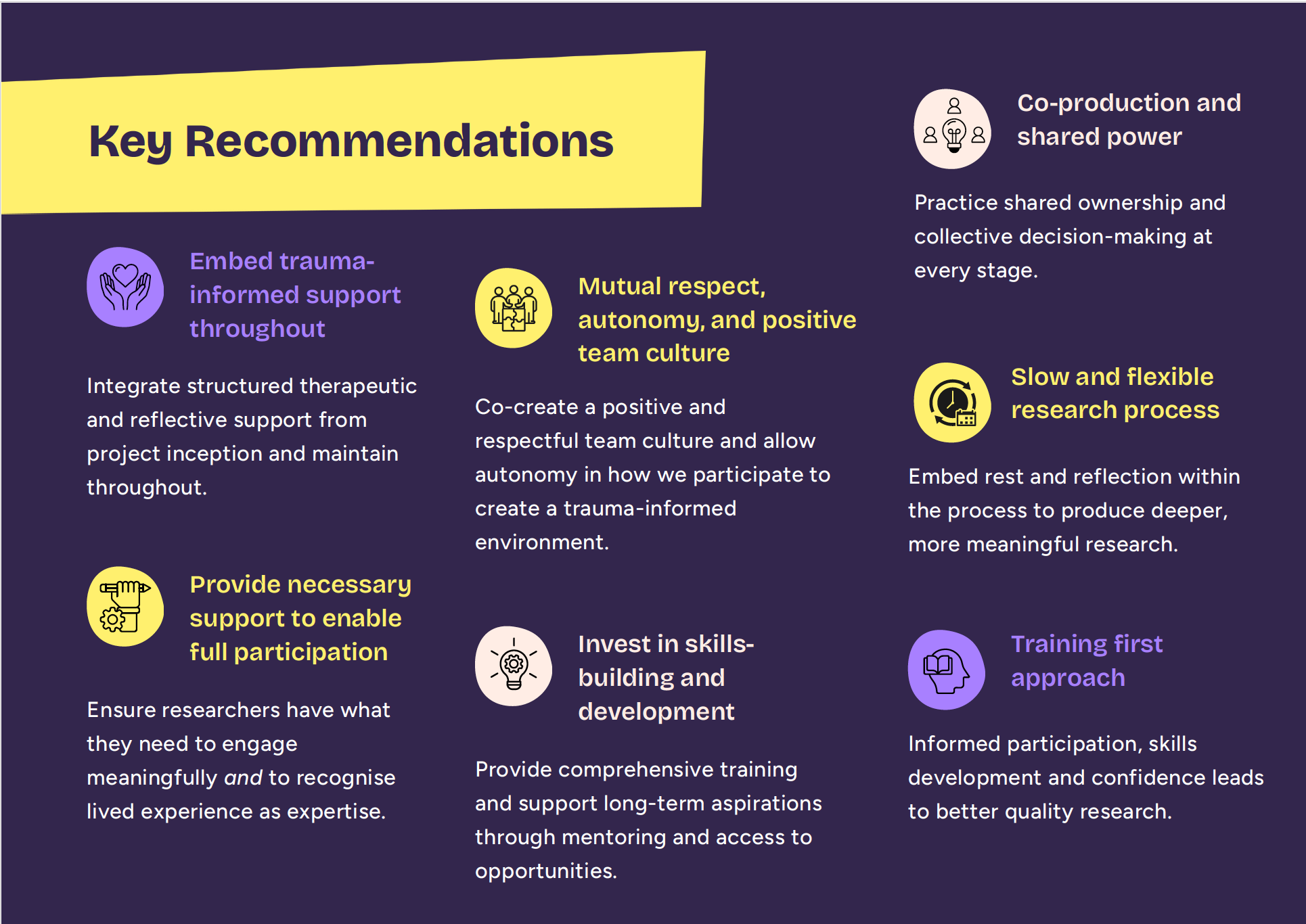
Throughout the project, WRW recognised the potential for vicarious trauma and burnout among the researchers, particularly given that many were still navigating a hostile and precarious asylum system themselves. To ensure appropriate support was in place, TTI clinical staff led a workshop on wellbeing and selfcare.
Our team also facilitated five reflective sessions where researchers could process their experiences, share wellbeing strategies and engage in peer support. In addition, researchers were offered access to one-to-one counselling.
Anne Marie from Women for Refugee Women said: “The psychological support we received through reflective sessions was vital for our wellbeing throughout the project.
“Listening to other women’s difficult experiences carried a real risk of re‑traumatisation. However, regular reflective practice, including self‑care check‑ins and emotional‑resilience sessions, helped us set personal boundaries, process trauma and manage emotional stress.”
Another member of the research team said: “TTI gave me the energy and knowledge to navigate those difficult moments.”
Sarah added: “The WRW researchers have not only had an impact on the injustices faced by refugee women, they also have been generous in sharing practical ways that others can do this work well and in a trauma-informed way. It was a privilege to contribute to this work; we also learned a lot from this process of building resilience and preventing harm.”
See here for more about the work of Women for Refugee Women and to support their campaigns.
To talk to TTI about how we can support approaches to resilience and well-being within your organisation, please contact us on info@tt-intl.org.